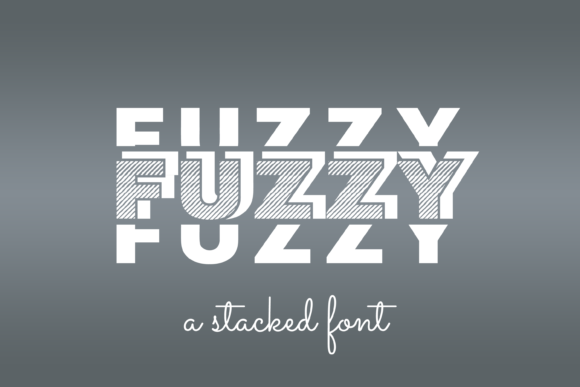
Fuzzy Display Font for Handmade Labels & Printables
As someone who designs printable wall art, hand-stamped tags, and seasonal SVG bundles for Etsy, I’ve learned that the right display font doesn’t just look pretty—it carries your brand’s warmth, builds trust at first glance, and makes customers pause mid-scroll. That’s why Fuzzy has become my go-to for projects where charm meets clarity: think candle jar labels with soft farmhouse appeal, wedding welcome boards that feel personal but polished, or boutique gift tags that whisper “handmade with care.”
Fuzzy is a friendly, slightly rounded display font with gentle curves, open letterforms, and a subtle bounce in its rhythm. It’s not overly decorative—no distracting swashes or exaggerated flourishes—but it’s unmistakably expressive. The lowercase ‘a’ and ‘g’ have soft, approachable shapes; the uppercase letters hold presence without stiffness. It reads as warm, modern, and quietly confident—ideal when you want your product to feel handmade *and* professionally designed.
I use Fuzzy most often for short, high-impact text: product names on apothecary jars, greeting card headlines, sticker slogans, and signage for craft fairs. Its generous x-height and clean spacing mean it scales beautifully—from 8-point printed hang tags to 24-inch wooden signs cut on my Cricut Maker. On matte paper or kraft cardstock, it holds crisp edges even at small sizes. For vinyl stickers or iron-on transfers, I’ve found it cuts cleanly at 12–14pt with minimal weeding—especially when I convert outlines and avoid overlapping strokes in design software.
Real-world uses? Last month, I refreshed my best-selling lavender-scented candle line using Fuzzy for the front label (“Lavender Fields”) paired with a light sans serif for ingredients and weight. Customers told me the new packaging felt “more intentional”—not just prettier, but more trustworthy. For holiday printables, I layered Fuzzy over watercolor backgrounds in my digital planner pages; the contrast between organic texture and soft typography made the download feel cohesive and premium. And for wedding clients, I use Fuzzy in welcome sign templates (paired with a delicate script for names), because it balances elegance and ease—never too formal, never too casual.
Fuzzy shines where readability matters *and* personality does too. It’s not built for body copy—skip it for multi-paragraph instructions or legal disclaimers—but it excels as a headline, title, or focal word. I’ve tested it on mugs, tote bags, and enamel pins: at 20–30pt, it retains charm and legibility after heat pressing or enamel filling. For seasonal collections—think “Pumpkin Spice,” “Cozy Nights,” or “Sunshine & Sea Salt”—Fuzzy adds instant mood without needing extra graphics.
Pairing Fuzzy thoughtfully elevates your whole design system. My favorite combo is Fuzzy + a clean, neutral sans serif like Montserrat or Inter—used for supporting text, pricing, or fine print. This pairing keeps things grounded while letting Fuzzy breathe as the star. For invitation suites or boutique branding, I’ll sometimes layer it with a refined serif (like Lora or Playfair Display) for elegant contrast—Fuzzy handles the joyful energy, the serif adds timeless structure. Avoid pairing it with other highly textured or bubbly fonts; its quiet confidence gets lost in the noise.
Before downloading, I always check what’s included: Fuzzy comes as a standard OTF/TTF set, with basic Latin character support and no extended language glyphs—but that’s been more than enough for my US-based shop and digital downloads. There are no alternate characters, ligatures, or swash versions listed, which actually works in my favor—I prefer simplicity for consistent cutting and printing. No need to toggle stylistic sets mid-project; what you see is what you get, and it works reliably across Canva, Silhouette Studio, Adobe Illustrator, and Cricut Design Space.
One practical note many makers overlook: commercial licensing. Fuzzy is a commercial font, meaning you’re fully covered to use it in physical products (stickers, mugs, apparel), digital downloads (PDF planners, SVG files, Canva templates), client work, and even resale items like printable wedding kits. Just keep your license intact—you don’t need to credit the font publicly, but you can’t resell Fuzzy itself or embed it in editable web fonts. For small shops selling under 500 units per year, this coverage is more than sufficient—and far less stressful than navigating ambiguous “personal use only” licenses.
What really sets Fuzzy apart isn’t just how it looks—it’s how it performs across mediums. A font that reads well on screen *and* prints cleanly on textured paper, cuts precisely on vinyl *and* holds detail on ceramic mugs, feels joyful *and* professional—that’s rare. It supports your craftsmanship instead of competing with it. When a customer sees your candle label in Fuzzy, they don’t just read “Vanilla Bean”—they sense intention, care, and quiet confidence. That’s the difference between a product that blends in and one that lingers in memory.
If you’re updating your shop’s visual voice, launching seasonal printables, or designing your first line of branded merchandise, give Fuzzy space to do what it does best: anchor your message with warmth, clarity, and handmade soul.